|
I am a PhD student at UC Berkeley, advised by Prof. Alexei Efros. I graduated from MIT with double major in AI and Math. I am fortunate to have worked with Prof. Kaiming He, Prof. Yilun Du, and Dr. Zhirong Wu. I also interned at Microsoft Research Asia and MIT-IBM Watson AI Lab. I hope to work on general problems in deep learning through the lens of computer vision. I am currently interested in generative models and representation learning. Email / CV / Github / Google Scholar |
|
|
For a full list of publications, see Google Scholar |
|
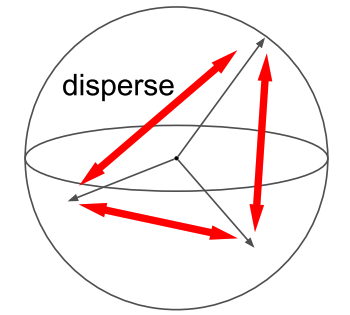
Runqian Wang, Kaiming He Preprint, 2025 code / paper Plug-and-play representation regularizer for generative modeling that brings consistent improvement across different settings. Follow-up works also show promising adoptation in robotics and NLP. |
|
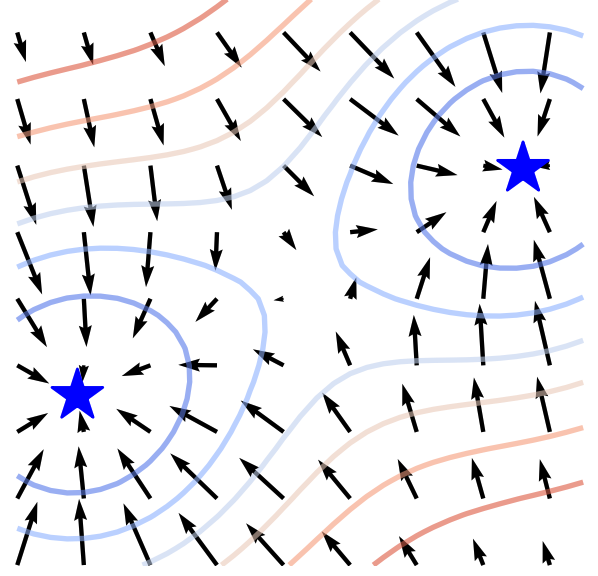
Runqian Wang, Yilun Du NeurIPS, 2026 website / code / paper New generative model that directly learns equilibrium dynamics using an implicit energy-based formulation. Exceeds Flow Matching in performance, supports optimization-based sampling, and naturally performs multiple downstream tasks. |
|
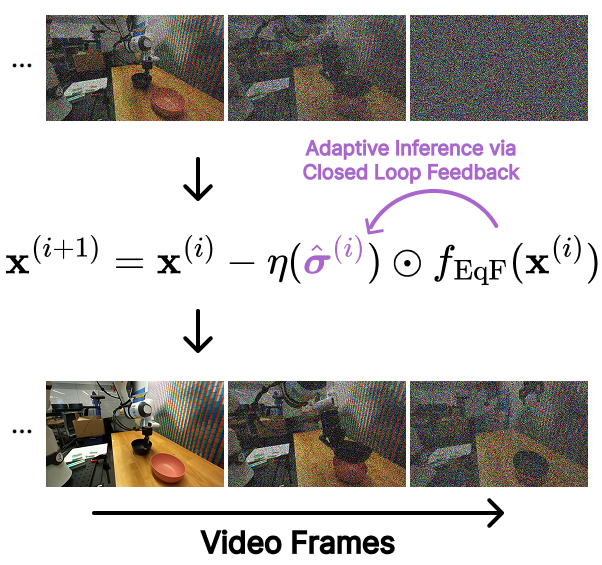
Hansen Jin Lillemark, Alex Rojas, Zachary Novack, Runqian Wang, Yilun Du, Yian Ma, Taylor Berg-Kirkpatrick, Rose Yu NeurIPS, 2026 website / code / paper Equilibrium Forcing improves and extends Equilibrium Matching to video generation, achieving better video generation quality and sampling speed through adaptive sampling. |
|
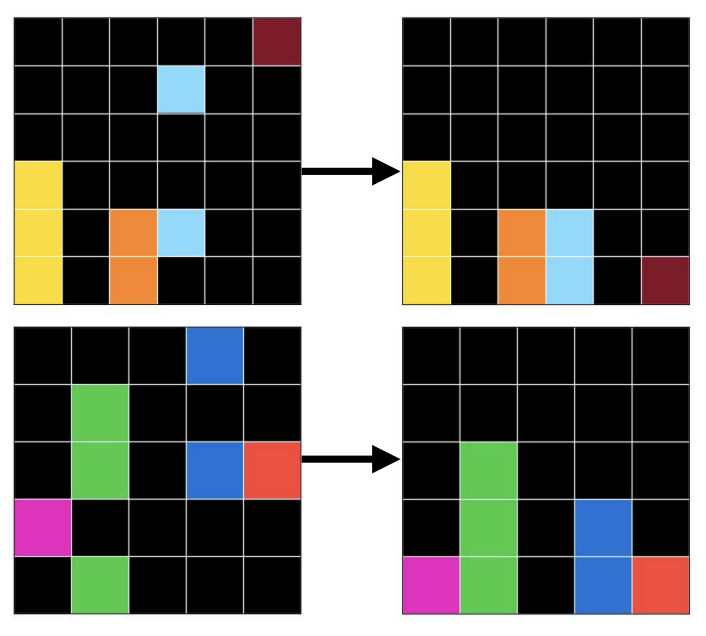
Keya Hu, Ali Cy, Linlu Qiu, Xiaoman Delores Ding, Runqian Wang, Yeyin Eva Zhu, Jacob Andreas, Kaiming He CVPR, 2026 code / paper Reframes ARC-AGI dataset as an image-to-image translation problem, achieving competitive performance with those of leading LLMs. |
|
Runqian Wang, Soumya Ghosh, David Cox, Diego Antognini, Aude Oliva, Rogerio Feris, Leonid Karlinsky NeurIPS, 2024 paper Enables nearly data-free and compute-efficient transfer of existing PEFT modules trained on old base model to new base models, while at least preserving, in most cases improve, performance. |
|
|